English ivy - Hedera helix
Plant Profile
Family: Araliaceae
Native Distribution: Most of Europe and western Asia
Local Distribution: Found throughout California along the coast, as well as in Shasta and Butte Counties
Cal-IPC Rating: High
Reproduction: Spreads by rooting from stems and stem fragments that contact the soil
Wildlife Food Consumers: Its berries provide crucial winter energy for American Robins, Mockingbirds, Cedar Waxwings, Steller’s Jays. The leaves offer shelter and forage for caterpillars of moths.
Sources:
Harvesting
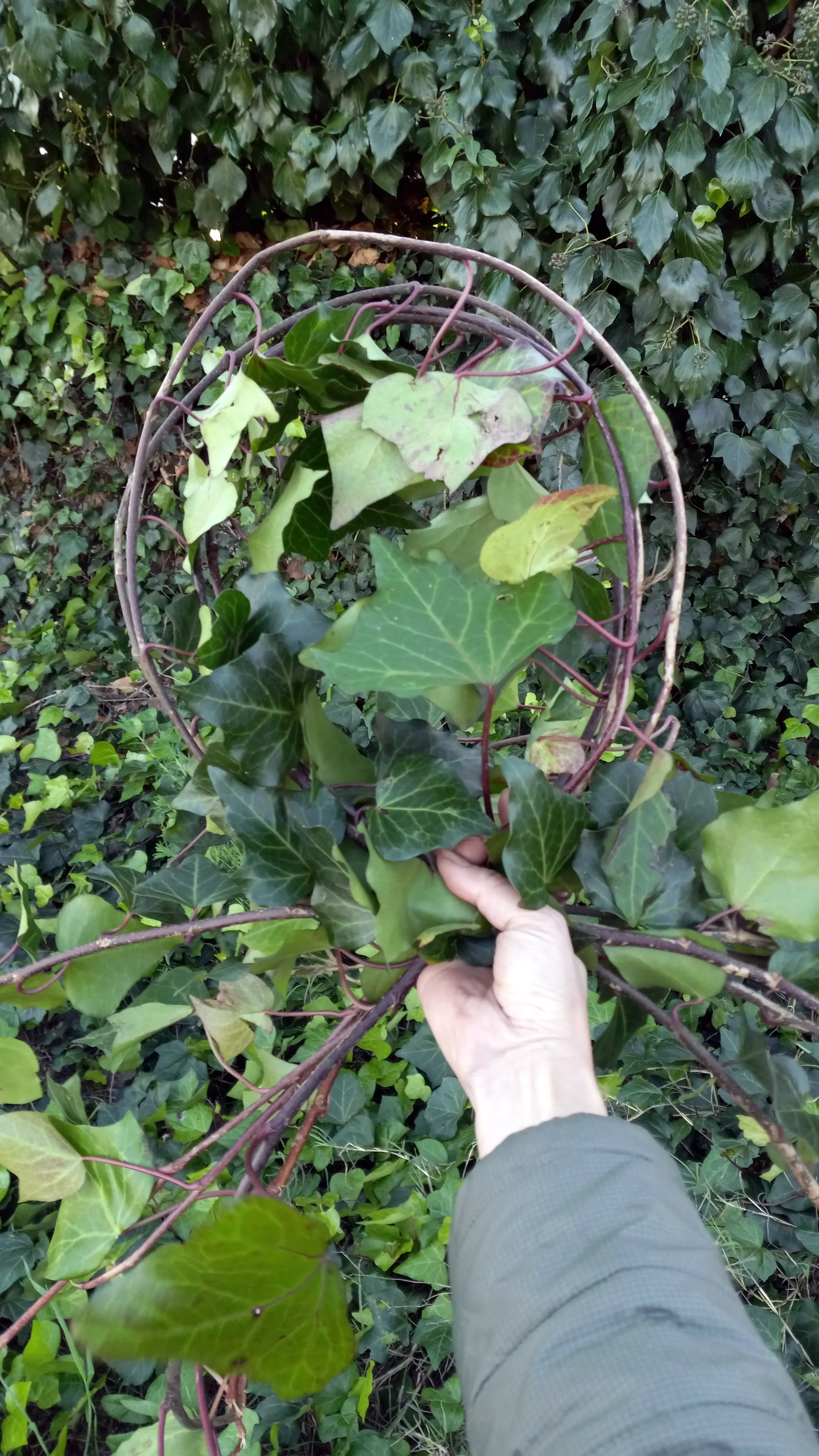
English ivy is ubiquitous in residential areas and streets throughout Los Angeles. Currently, my former community garden is my main source for collecting a large batch of English ivy, but I’ve also removed a lot of overgrowth from a family member’s backyard. If you live in the area and this is a material that interests you, I don’t think it would difficult to find a neighbor who would appreciate an offer to periodically prune back this fast growing vine. The community garden manager is kind enough to alert me when the vines start to escape the intended boundaries and allows me to collect as much as I can handle.
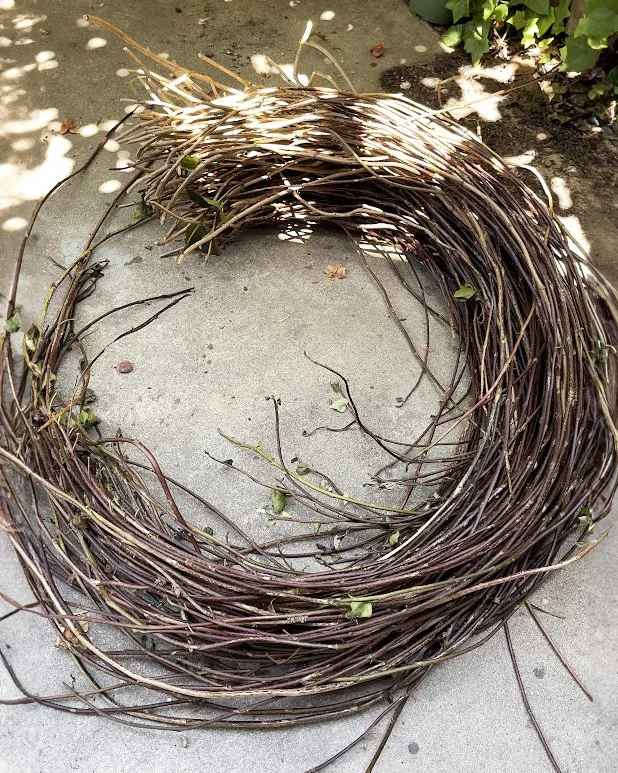
A gardener came by to say hello while I worked, shared a sweet lime from his harvest, and reminded me that the plant will take root anywhere vine fragments are left behind. The life force in this plant is amazing! I made sure to be extra cautious of cleaning up after myself before rolling up the vines into circles, packing up, and heading home.
Processing & Use
I clean leaves off the vines at the time of collecting. By firmly holding one end of a single piece of vine with one hand, then making a fist around the vine using your other hand and running it along the length, you can easily and efficiently remove the leaves and small branches. I use a wheelbarrow to catch the leaves, then dump them into the compost.
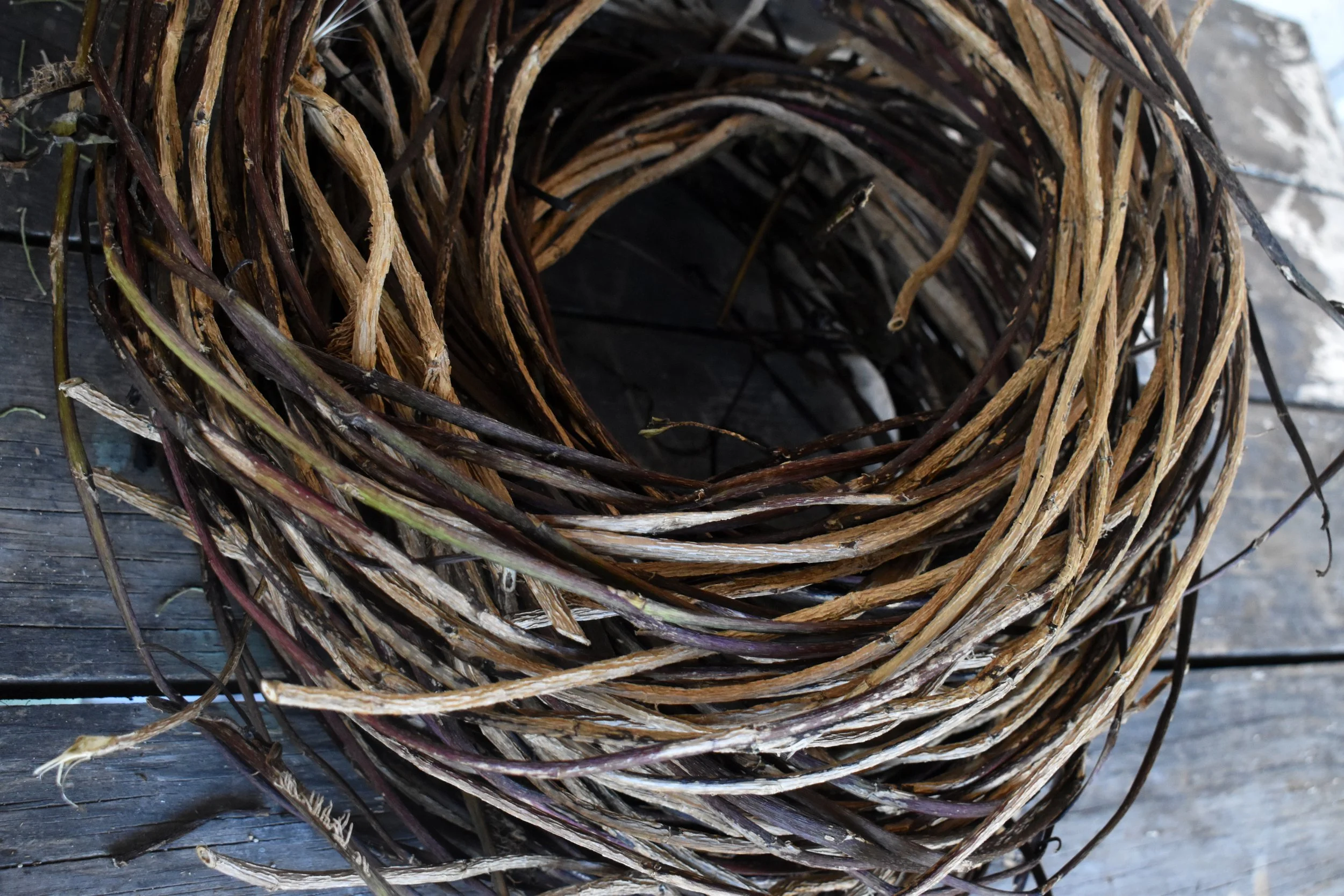
After harvest, I leave the vines circled up and let them fully dry for several weeks. This will reduce the risk of pests and mold, as well as unwanted shrinkage in the final woven piece.
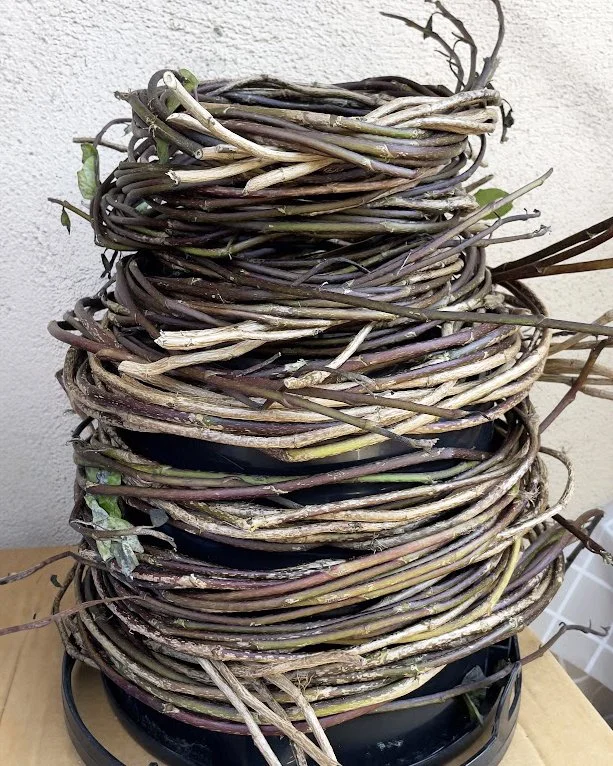
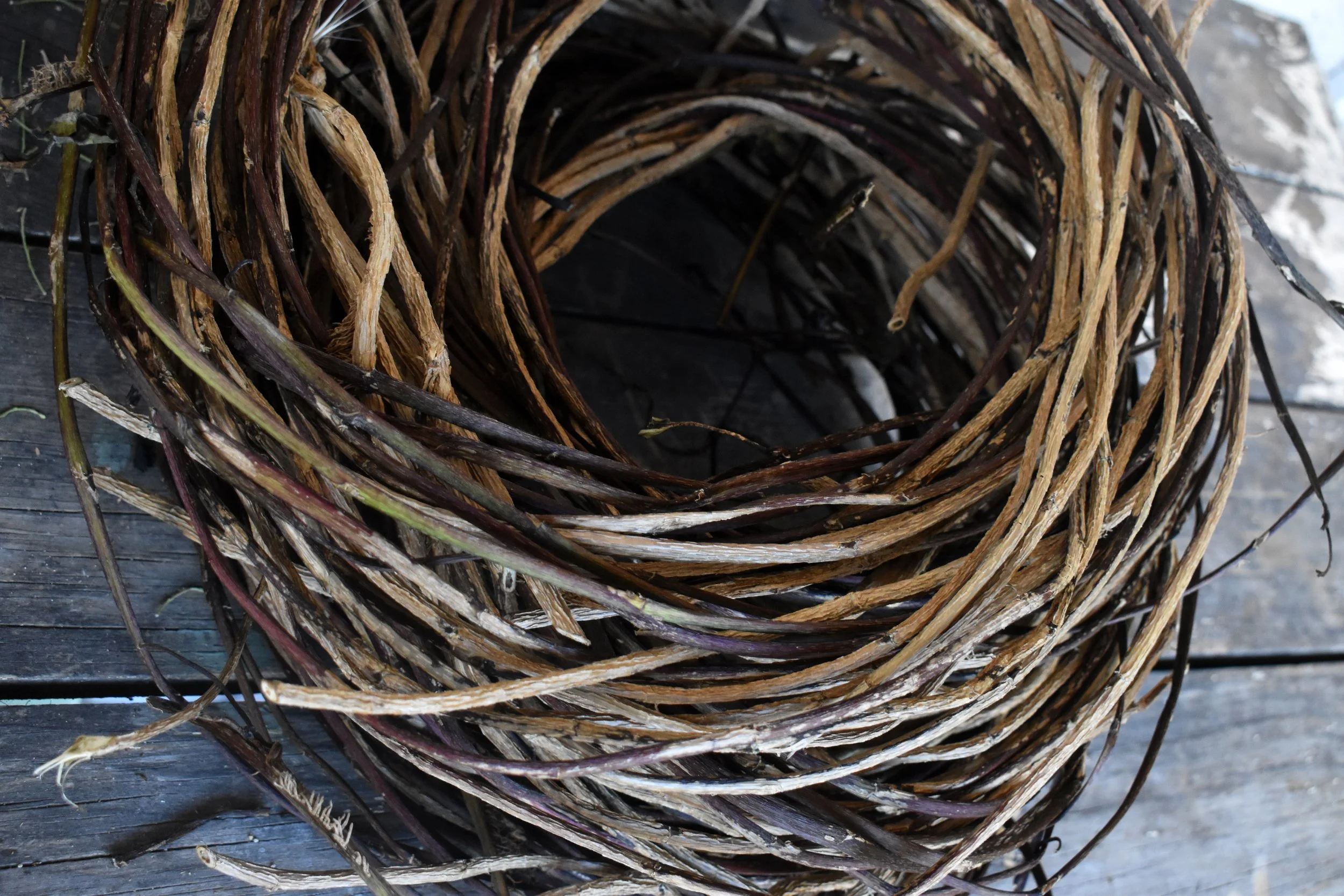
When ready to use, soak the amount needed in a big basin or tub overnight. In the morning, remove from water and let them sit for approximately an hour to “mellow out” — this is to ensure that the moisture is evenly distributed throughout the fibers and not excessively wet.
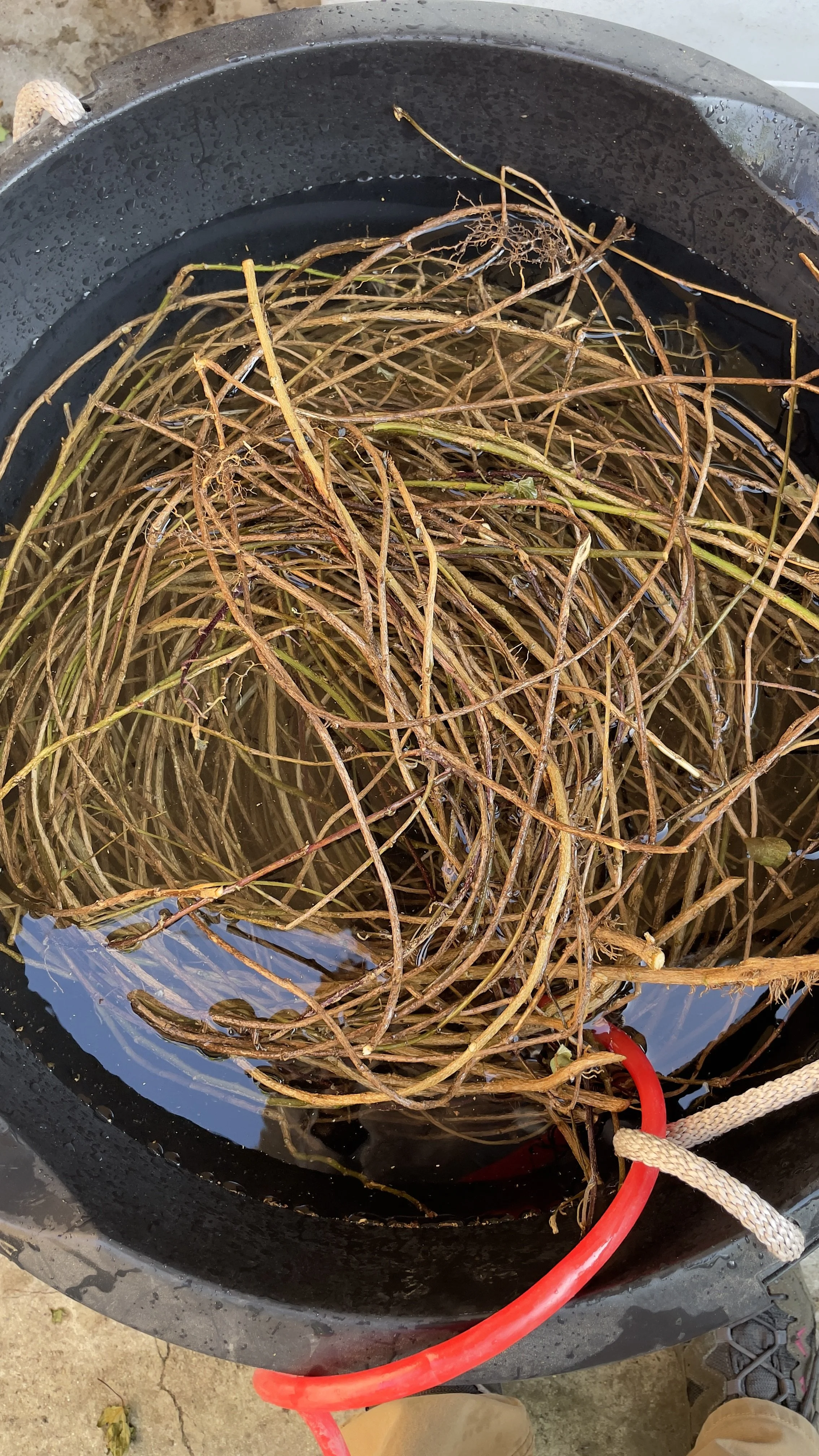
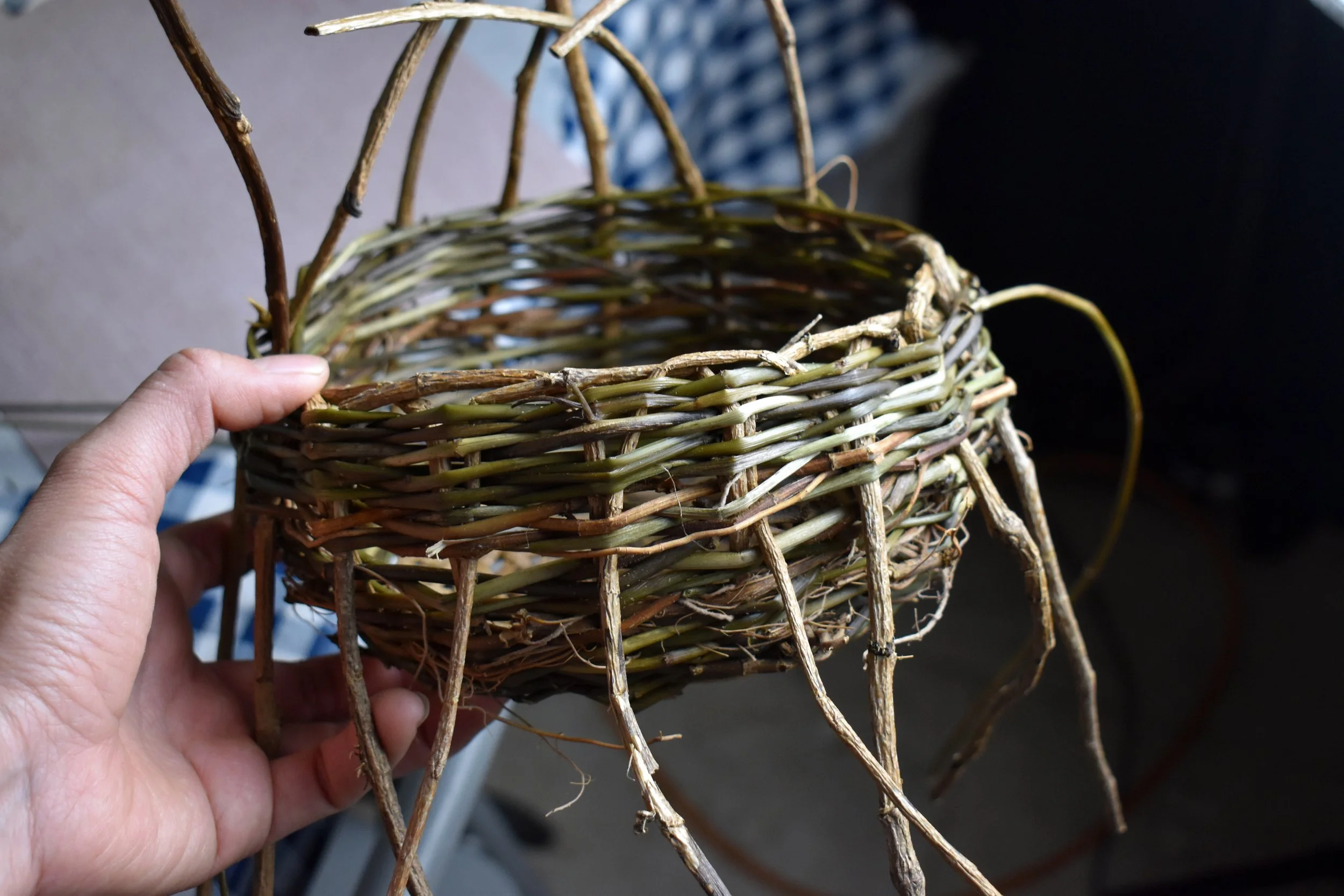
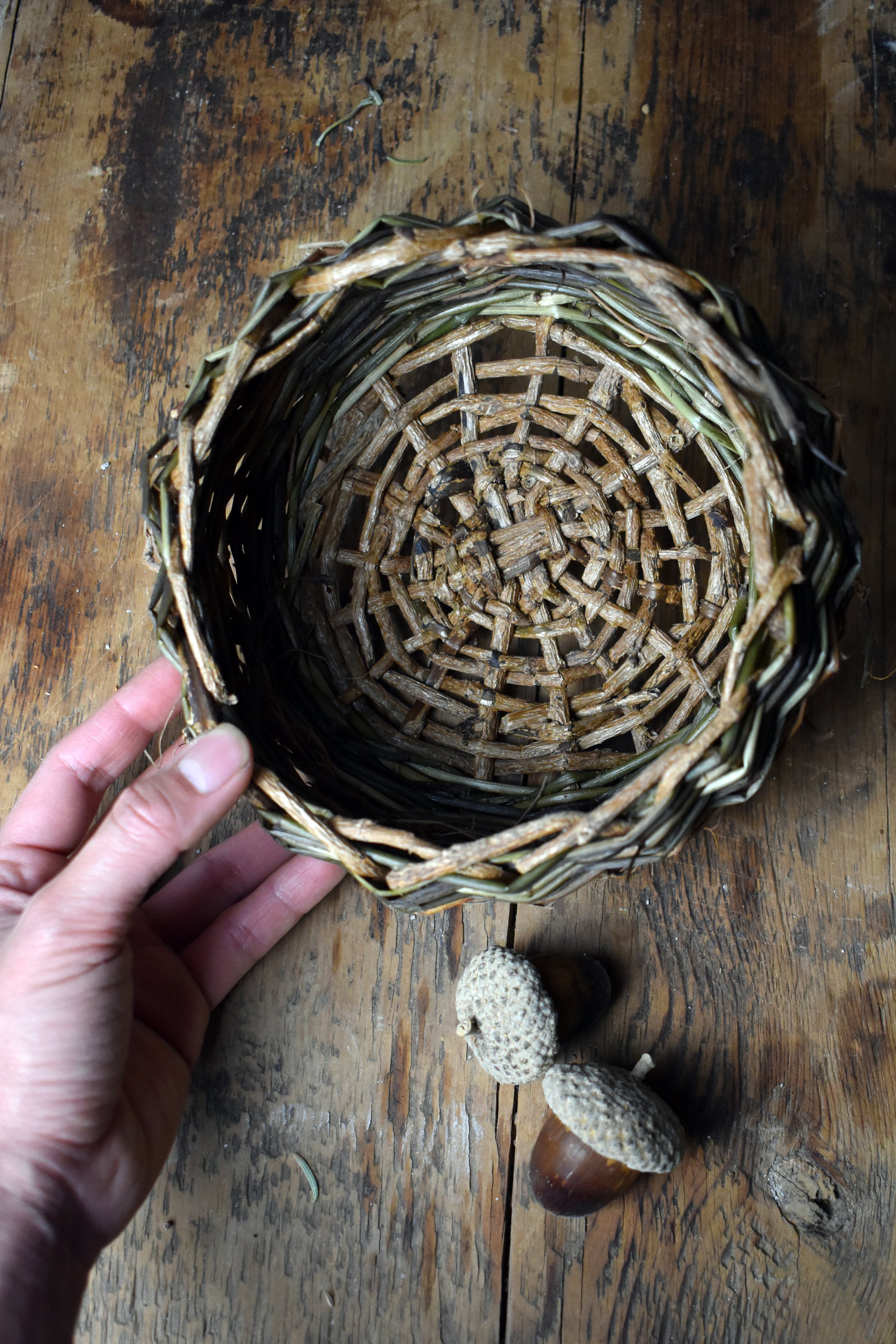
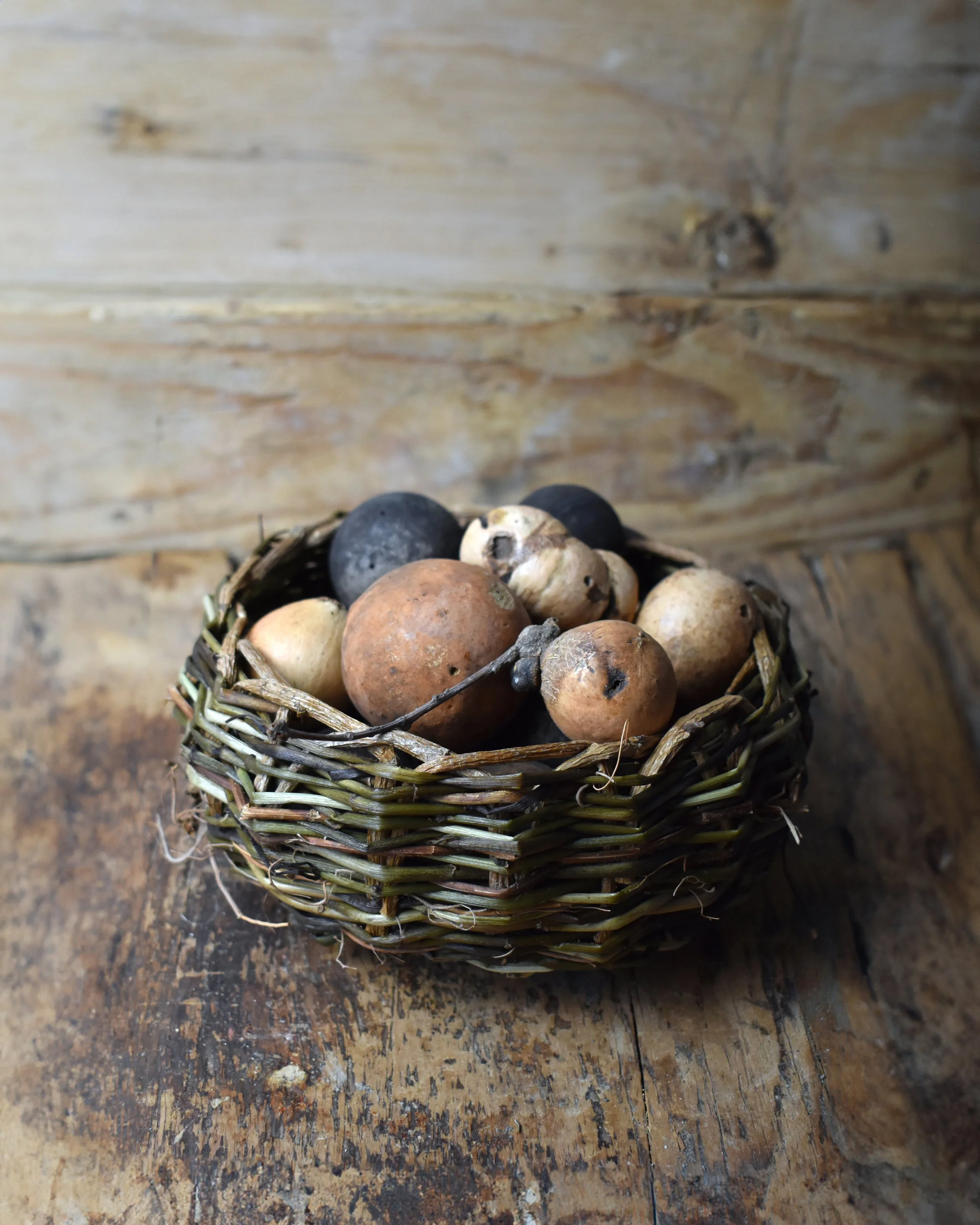
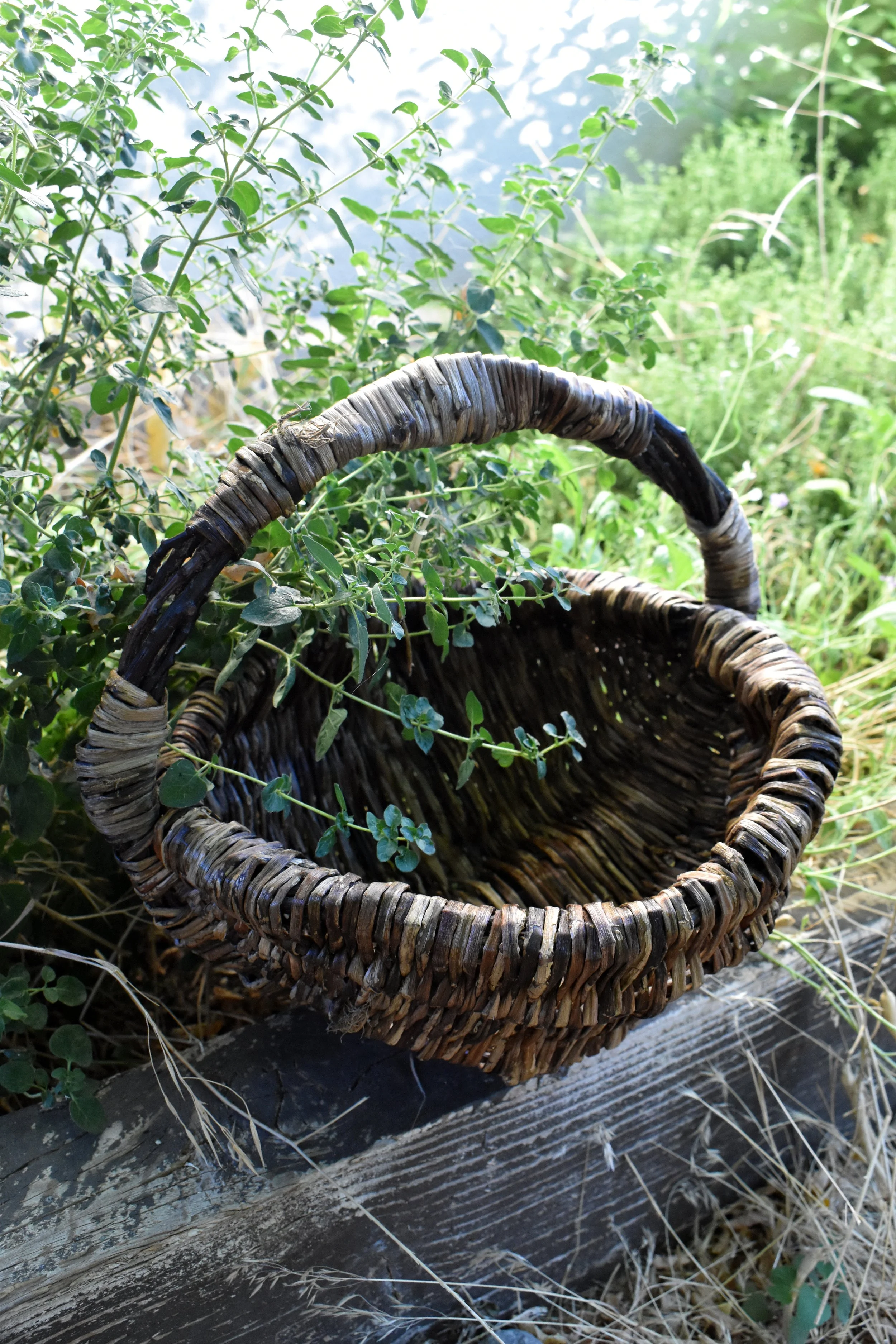
I’ve come to appreciate this plant material for ribbed basketmaking. For the basket below, I made the foundational rib with wild chokecherry branches and used English ivy as weavers. English ivy has length and flexibility when properly prepared (fully dried for several weeks then soaked overnight), which makes it an enjoyable material to work with. It also has structural rigidity once dried, interesting color variegations, and texture from the tufts of roots that occur along the vine — the result is a basket that is functional, sturdy, and beautiful.
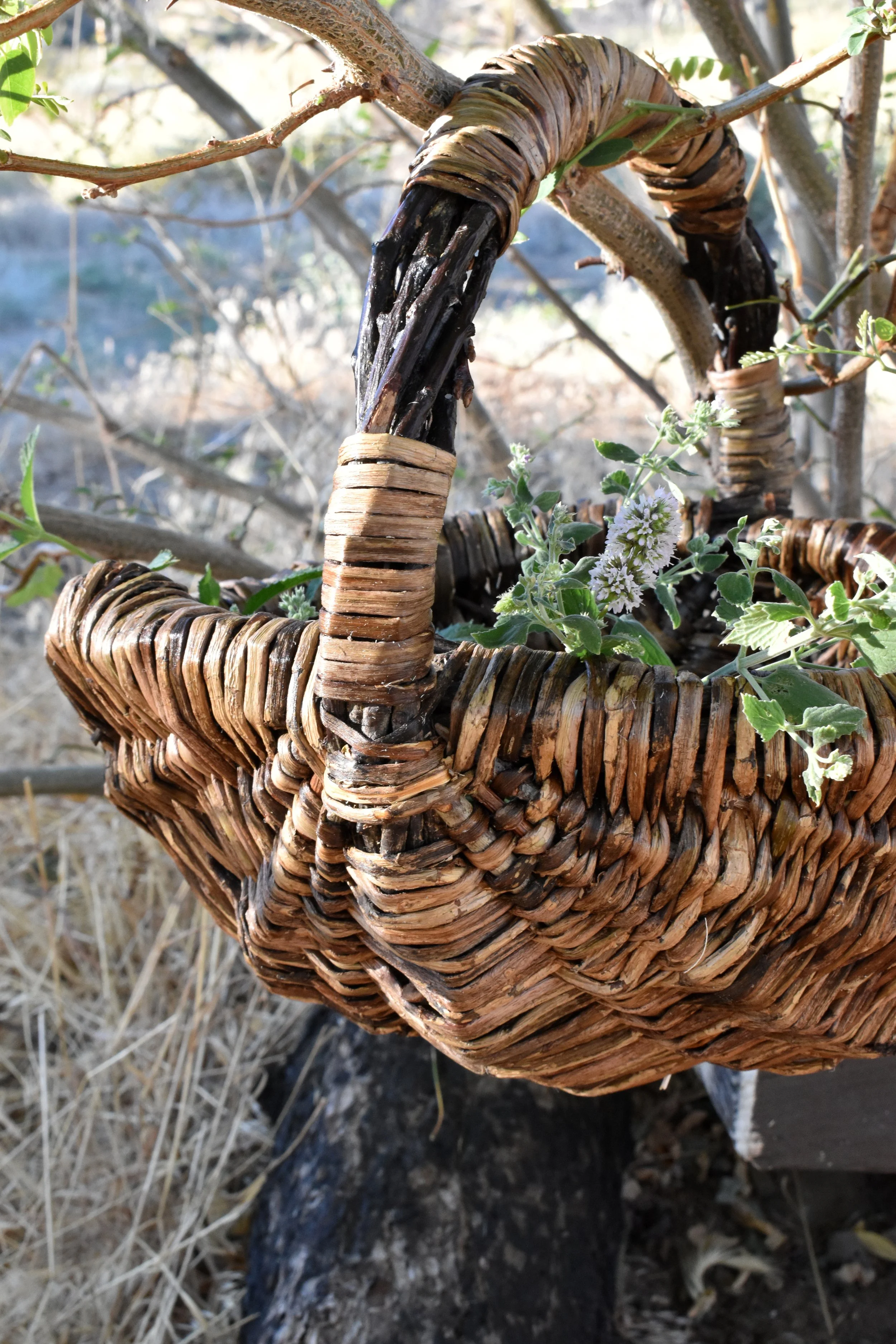
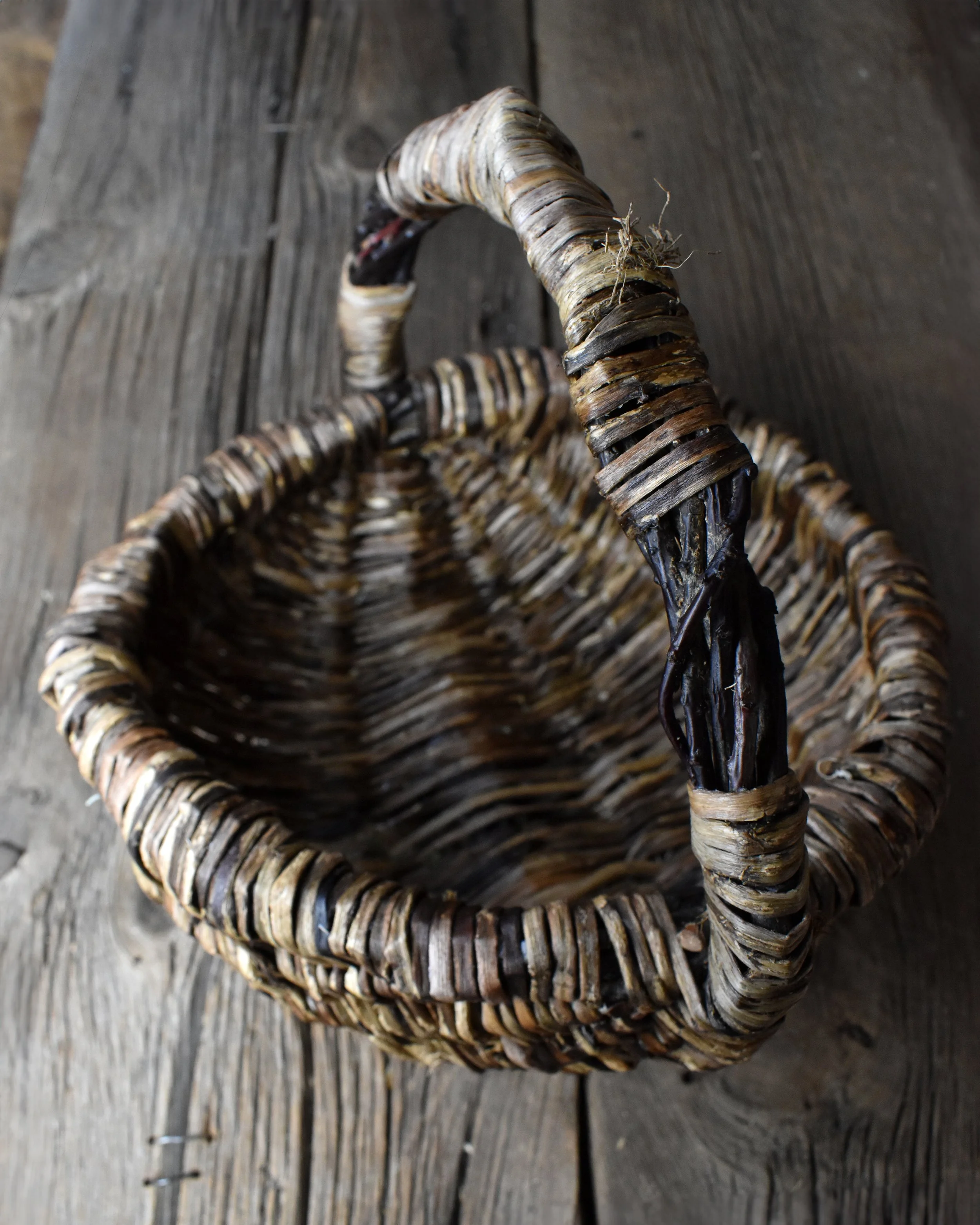
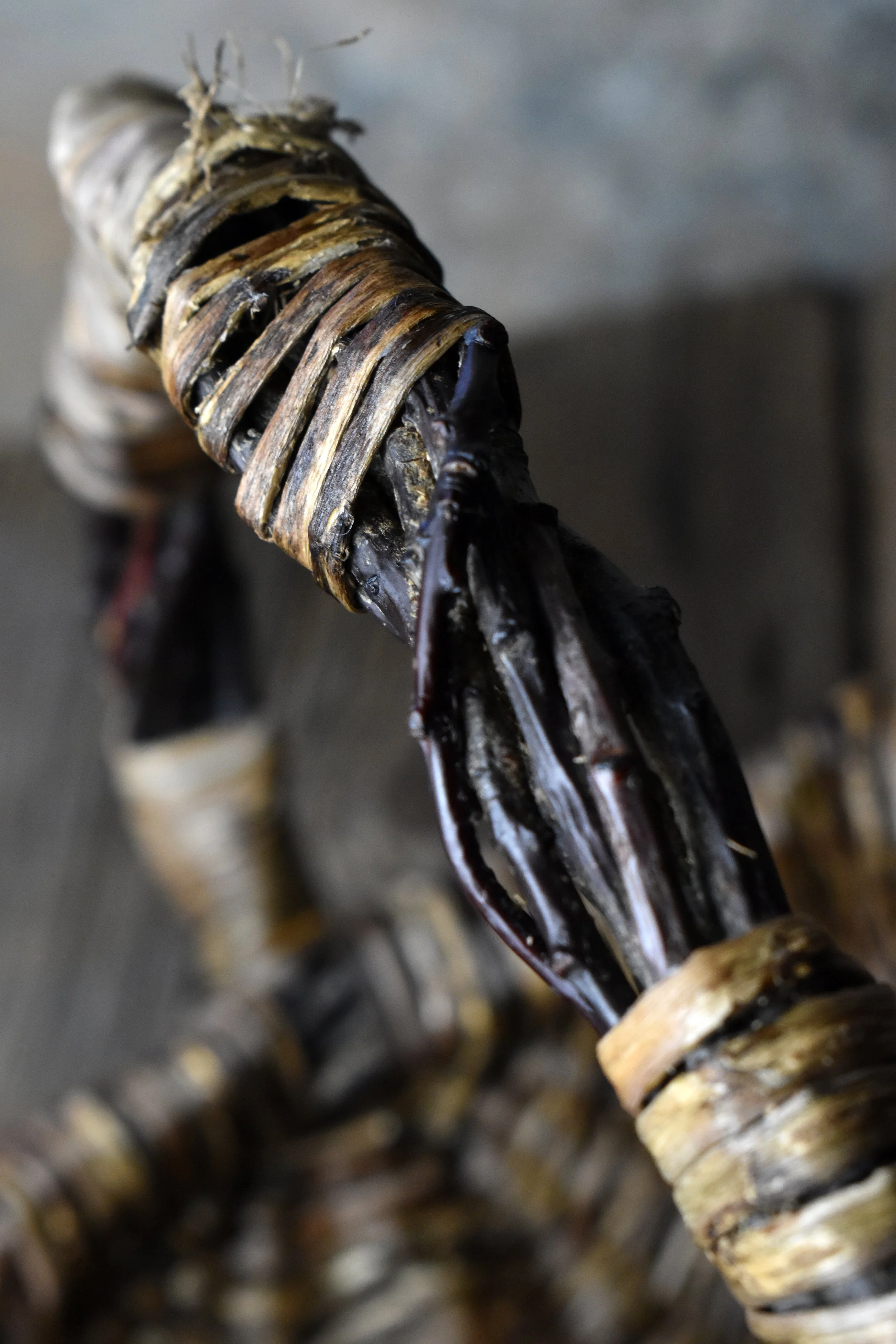
Below are some other experiments incorporating English ivy.
Experiment with shape:
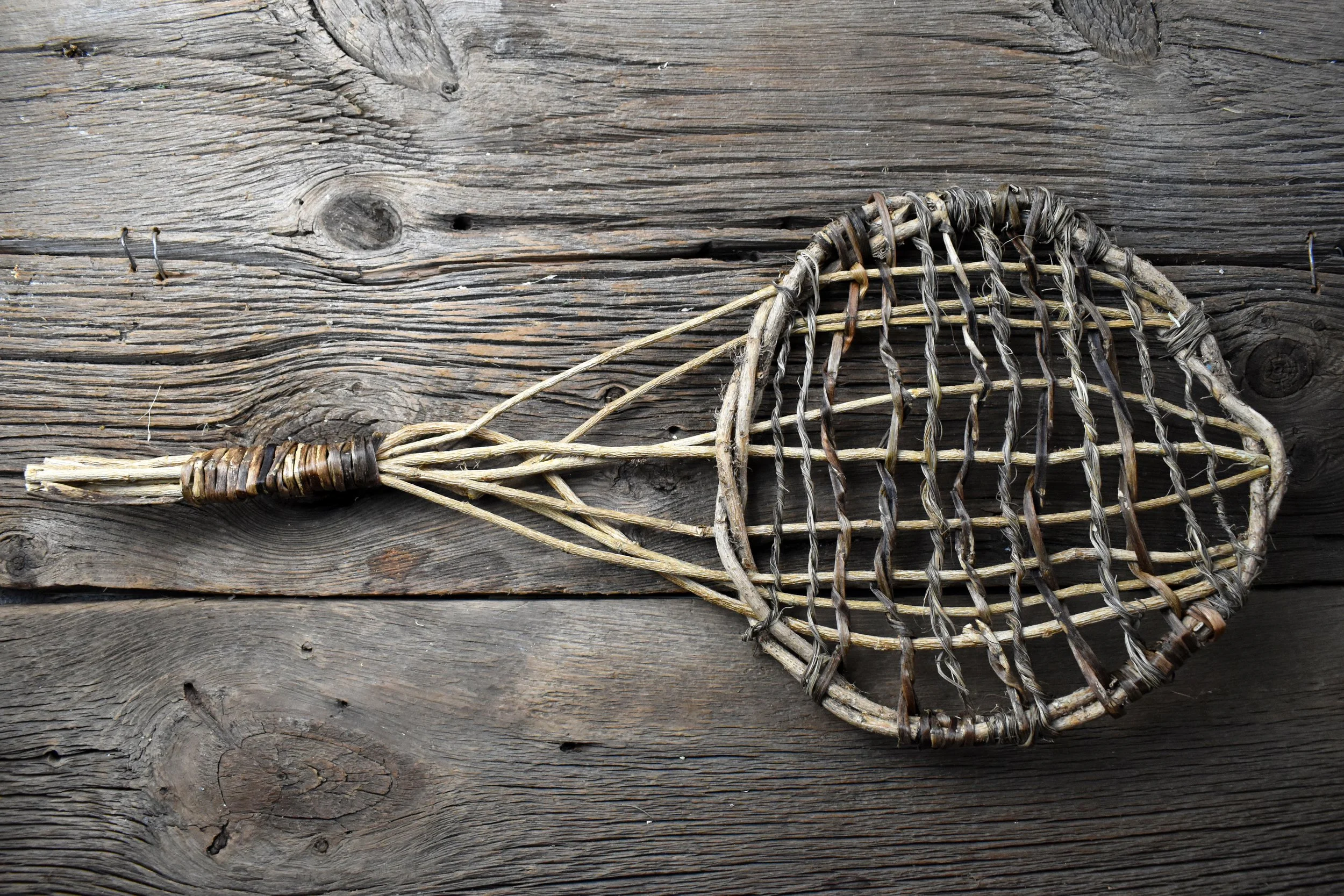
English ivy with rubber rabbitbrush (and small amounts of additional fibers):
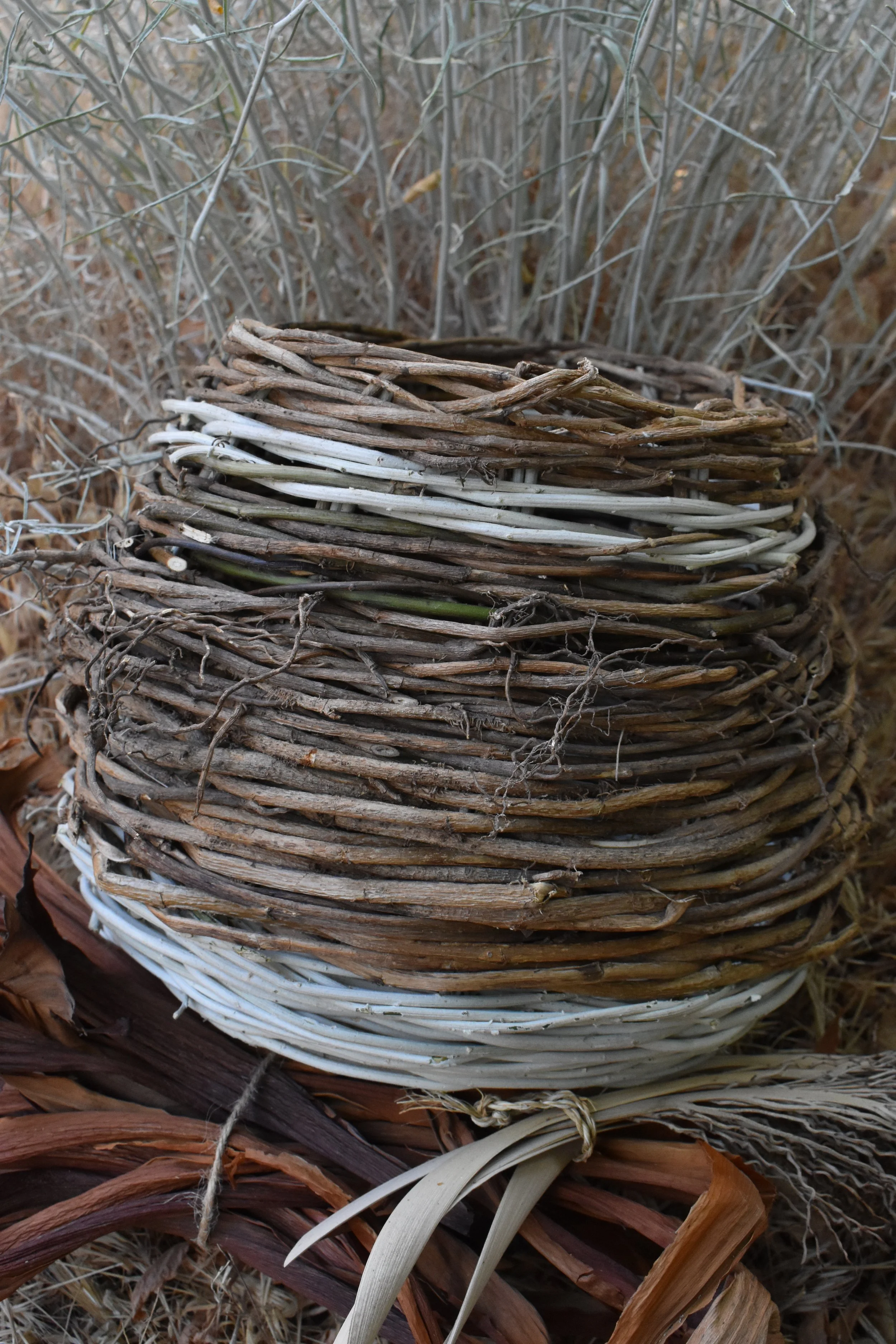
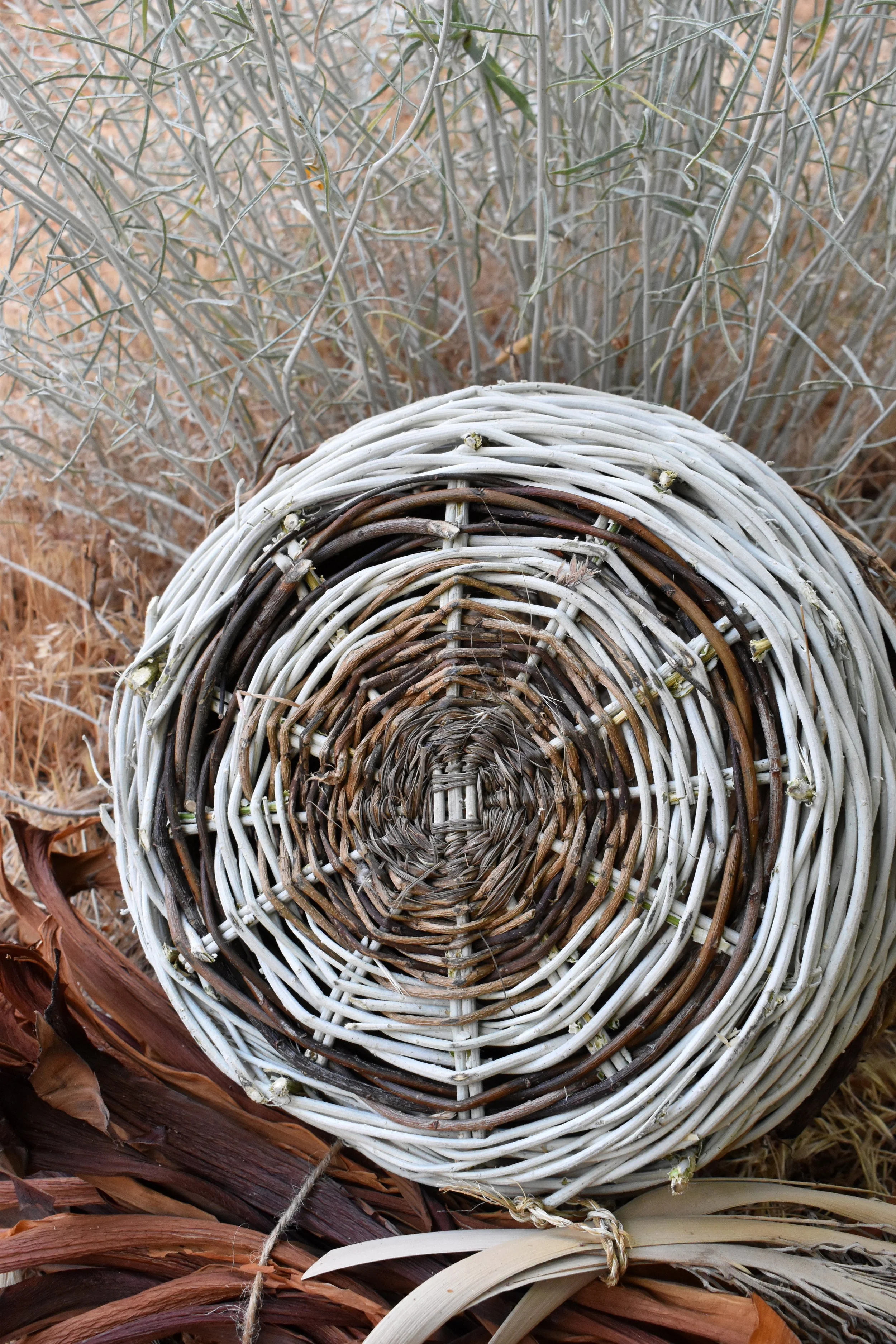
English ivy base with periwinkle weavers: